
Category: Global Projects

  • SMUGGLED and TRAFFICKED in AMERICA

    SMUGGLED and TRAFFICKED in AMERICA


    An 18-year old sex trafficking victim, she was brought to IWH by the FBI. Florencia was rescued during a major sting operation in Gwinnett County. She had been smuggled into the U.S. from Mexico and was told she would be working in a factory. Coming from a poor village, she saw an opportunity to make money to send back to her impoverished family. Upon arriving into the U.S. she was forced to live with 12 other women who had been smuggled in for the purpose of prostitution. She initially refused to comply with her captors and was beaten. Eventually she was told if she did not do as they asked, they would kill her. She and the other women were rescued during the sting and she was brought to the shelter both as a victim and as a witness waiting to testify against her abductors. During her stay she learned basic English, received a temporary work permit, found a job sewing curtains, and after six months in the shelter, was able to rent her own apartment by sharing expenses with another survivor she had met at our shelter. The perpetrators pled guilty to sex trafficking and were sentenced to 7 years in jail and then deportation upon their release.


  • ARRANGED MARRIAGE DOES NOT MEAN SAFETY or LOVE

    ARRANGED MARRIAGE DOES NOT MEAN SAFETY or LOVE

    Originally from India, Suma was in an arranged marriage and met her husband for the first time on their wedding day. Within three weeks of the marriage, she was being verbally and emotionally abused. Her husband told her she was ugly and should be grateful somebody married her. He had received a substantial dowry from her wealthy family to marry her. Suma was an educated woman who had been a history professor. She came to the U.S. on a fiancée visa and was continually threatened by her husband with deportation if she did not do as he asked. When she became pregnant, her husband accused her of adultery and said the child was not his. He beat her causing a miscarriage which led to her going to the emergency room. The doctors there called police. The husband was arrested but bailed out two days later. Frightened she contacted one of the local refugee service providers who referred her to IWH. Suma was suffering from depression over the miscarriage, a marriage that was destroyed by abuse, and the fear that her family would blame her for everything. It took a lot of individual counseling and support to help Suma’s self-esteem. IWH also referred her for legal assistance and assisted in helping her find work as a live-in nanny. She stays in touch and lets us know she is happy in her work and that the family who employs her treats her well.

  • Pandemic effects of education for girls.

    Pandemic effects of education for girls.

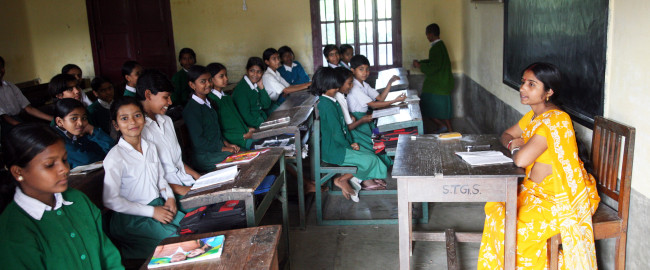
    Our work in supporting the global issues of children is essential because it will take all of us working with our unique capacities to solve the extremely difficult challenges ahead. Hidden Choices is dedicated to the empowerment of all children, boys and girls, through the challenges of supporting educational programs to impact change in a world marred by long standing discrimination. Experts from all sectors are weighing in on the long lasting impact upon nations. One of Nigeria’s leading economists and professor at the Lagos Business School, Pat Utomi says, “in the age of the skilled worker, not educating women is immediately cutting off 50 percent of your competitiveness as a nation.” This deliberate neglect is alarming and one of the keys to development for global competitiveness and the health of nation building, community building, family building. Colored by culture, ethnic groups, genders and classes it is essential to understand how all of these factors play into discrimination against girls’education. Even before birth, females are killed in countries like India and China where girl babies are not preferred simply because they will be a financial burden to the family. Female gendercide. So, what can be done to change the attitudes of the world that all children have the inalienable right to be born, have the right to live and grow into flourishing citizens of our global family.

    Just by being born a female a snow ball effect takes place as gender discrimination and the unforgiveable pandemic treatment of children worldwide.  Once a girl child is old enough to go to school in developing countries she is kept home for housework and to help with other siblings or horrifically sold off into a lifetime of slavery for a few dollars to “rid the family of the burden.” She is a target for sexual violence and rape, according to the World Health Organization is 3 times more likely to be at risk for HIV, while in armed conflicts casualties, over 90% are mostly women and children.

    As a hotbed of social controversy and slow accountability of Agencies and International leaders we believe the global issue of education is one of the most critical issues in alleviating poverty and empowering young women and men.  An issue to watch.

  • Education is a human right and is cited in the Universal Declaration of Human Rights

    Education is a human right and is cited in the Universal Declaration of Human Rights

    What can we do to help our young people over the globe succeed.

    Many girls do not attend school because:

    • of the lack of schools
    • domestic or child labor
    • general view that girls should not be educated
    • limited access to educational sectors
    • extreme poverty

    Women represent 70% of the world’s 1.3 b people living in extreme poverty

    • Half of the women over 25  yrs old have never been to school ( Girls Global Education Fund)
    • Less than half of the world’s poorest who are 15 and older have had enough schooling to even read or write.
    • Everyday more than 125 million primary school children  do not attend school

    It is important to emphasize the fact that once girls don’t go to school, once they are married too young and having children too early they can never be equal to men, and can never have the same political and economic power as men.

    The effect of these factors is not limited to the success of the individual but important for the development of nations as a whole.

    Education and access to maternal health, if properly planned, allow people to live longer, and add value to the development

    In areas like South Asia and Sub-Saharan Africa, where 90 percent of the world’s youth are located, there is a massive opportunity for societies to capitalize on their resources and accelerate their development. But governments must invest in their populations through education, healthcare, access to entrepreneurial opportunities and political participation in order to flourish

    2010 Documentary – Waiting for Superman – a look at our  Education systems here in America

    Benefits of Education for Women &Girls

    • According to a World Bank research education  for girls is a main factor to economic & social development.  When girls are not educated, a society severely slows down its productivity and rate of growth.
    • Educated girls become educated women and have more influence with measurable benefits to influence entire families, communities and nations.
    • Spilling over into the families as indicators of better health, primary bread winners and economic factors.


  • Poverty Alleviation

    Poverty Alleviation


    In October 2013, I had the privilege of attending Opportunity Collaboration, an annual summit event in Mexico that deals with a subject that is very close to my heart.  The summit gathered together amazing people: thought leaders, corporate innovators, academicians and NGO’s to deal with the paramount challenges of the 21st Century all focused on three pressing dimensions of poverty alleviation and sustainability:  food, water and human care.

    Clearly these are critical to the future of humanity. Right now, about one in eight of the human beings with whom we share this planet lives without adequate drinking water. Almost that many lack food security.

    How to meet current needs, without compromising the prospects of generations who will follow, is a very complicated issue.

    It was encouraging to see so many brilliant economists and development specialists working so hard on the collaborative innovations and ideas that can help us produce, distribute and use precious resources more efficiently and equitably for the populations we are entrusted with.

    Collectively our work is essential because it will take all of us working with our unique capacities to solve the really difficult challenges ahead.


  • Poverty in the U.S

    Poverty in the U.S

    WASHINGTON (AP) — Four out of 5 U.S. adults struggle with joblessness, near poverty or reliance on welfare for at least parts of their lives, a sign of deteriorating economic security and an elusive American dream.

    Survey data exclusive to The Associated Press points to an increasingly globalized U.S. economy, the widening gap between rich and poor and loss of good-paying manufacturing jobs as reasons for the trend.

    The findings come as President Barack Obama tries to renew his administration’s emphasis on the economy, saying in recent speeches that his highest priority is to “rebuild ladders of opportunity” and reverse income inequality.

    Hardship is particularly on the rise among whites, based on several measures. Pessimism among that racial group about their families’ economic futures has climbed to the highest point since at least 1987. In the most recent AP-GfK poll, 63 percent of whites called the economy “poor.”

    “I think it’s going to get worse,” said Irene Salyers, 52, of Buchanan County, Va., a declining coal region in Appalachia. Married and divorced three times, Salyers now helps run a fruit and vegetable stand with her boyfriend, but it doesn’t generate much income. They live mostly off government disability checks.

    “If you do try to go apply for a job, they’re not hiring people, and they’re not paying that much to even go to work,” she said. Children, she said, have “nothing better to do than to get on drugs.”

    While racial and ethnic minorities are more likely to live in poverty, race disparities in the poverty rate have narrowed substantially since the 1970s, census data show. Economic insecurity among whites also is more pervasive than is shown in government data, engulfing more than 76 percent of white adults by the time they turn 60, according to a new economic gauge being published next year by the Oxford University Press.

    The gauge defines “economic insecurity” as experiencing unemployment at some point in their working lives, or a year or more of reliance on government aid such as food stamps or income below 150 percent of the poverty line. Measured across all races, the risk of economic insecurity rises to 79 percent.

    “It’s time that America comes to understand that many of the nation’s biggest disparities, from education and life expectancy to poverty, are increasingly due to economic class position,” said William Julius Wilson, a Harvard professor who specializes in race and poverty.

    He noted that despite continuing economic difficulties, minorities have more optimism about the future after Obama’s election, while struggling whites do not.

    “There is the real possibility that white alienation will increase if steps are not taken to highlight and address inequality on a broad front,” Wilson said.

    ___

    Sometimes termed “the invisible poor” by demographers, lower-income whites are generally dispersed in suburbs as well as small rural towns, where more than 60 percent of the poor are white. Concentrated in Appalachia in the East, they are also numerous in the industrial Midwest and spread across America’s heartland, from Missouri, Arkansas and Oklahoma up through the Great Plains.

    More than 19 million whites fall below the poverty line of $23,021 for a family of four, accounting for more than 41 percent of the nation’s destitute, nearly double the number of poor blacks.

    Still, while census figures provide an official measure of poverty, they’re only a temporary snapshot. The numbers don’t capture the makeup of those who cycle in and out of poverty at different points in their lives. They may be suburbanites, for example, or the working poor or the laid off.

    In 2011 that snapshot showed 12.6 percent of adults in their prime working-age years of 25-60 lived in poverty. But measured in terms of a person’s lifetime risk, a much higher number — 4 in 10 adults — falls into poverty for at least a year of their lives.

    The risks of poverty also have been increasing in recent decades, particularly among people ages 35-55, coinciding with widening income inequality. For instance, people ages 35-45 had a 17 percent risk of encountering poverty during the 1969-1989 time period; that risk increased to 23 percent during the 1989-2009 period. For those ages 45-55, the risk of poverty jumped from 11.8 percent to 17.7 percent.

    By race, nonwhites still have a higher risk of being economically insecure, at 90 percent. But compared with the official poverty rate, some of the biggest jumps under the newer measure are among whites, with more than 76 percent enduring periods of joblessness, life on welfare or near-poverty.

    By 2030, based on the current trend of widening income inequality, close to 85 percent of all working-age adults in the U.S. will experience bouts of economic insecurity.

    “Poverty is no longer an issue of ‘them’, it’s an issue of ‘us’,” says Mark Rank, a professor at Washington University in St. Louis who calculated the numbers. “Only when poverty is thought of as a mainstream event, rather than a fringe experience that just affects blacks and Hispanics, can we really begin to build broader support for programs that lift people in need.”

    Rank’s analysis is supplemented with figures provided by Tom Hirschl, a professor at Cornell University; John Iceland, a sociology professor at Penn State University; the University of New Hampshire’s Carsey Institute; the Census Bureau; and the Population Reference Bureau.

    Among the findings:

    For the first time since 1975, the number of white single-mother households who were living in poverty with children surpassed or equaled black ones in the past decade, spurred by job losses and faster rates of out-of-wedlock births among whites. White single-mother families in poverty stood at nearly 1.5 million in 2011, comparable to the number for blacks. Hispanic single-mother families in poverty trailed at 1.2 million.

    —The share of children living in high-poverty neighborhoods — those with poverty rates of 30 percent or more — has increased to 1 in 10, putting them at higher risk of teen pregnancy or dropping out of school. Non-Hispanic whites accounted for 17 percent of the child population in such neighborhoods, up from 13 percent in 2000, even though the overall proportion of white children in the U.S. has been declining.

    The share of black children in high-poverty neighborhoods dropped sharply, from 43 percent to 37 percent, while the share of Latino children ticked higher, from 38 to 39 percent.

    ___

    Going back to the 1980s, never have whites been so pessimistic about their futures, according to the General Social Survey, which is conducted by NORC at the University of Chicago. Just 45 percent say their family will have a good chance of improving their economic position based on the way things are in America.

    The divide is especially evident among those whites who self-identify as working class: 49 percent say they think their children will do better than them, compared with 67 percent of non-whites who consider themselves working class.

    In November, Obama won the votes of just 36 percent of those noncollege whites, the worst performance of any Democratic nominee among that group since 1984.

    Some Democratic analysts have urged renewed efforts to bring working-class whites into the political fold, calling them a potential “decisive swing voter group” if minority and youth turnout level off in future elections.

    “They don’t trust big government, but it doesn’t mean they want no government,” says Republican pollster Ed Goeas, who agrees that working-class whites will remain an important electoral group. “They feel that politicians are giving attention to other people and not them.”

    ___

    AP Director of Polling Jennifer Agiesta, News Survey Specialist Dennis Junius and AP writer Debra McCown in Buchanan County, Va., contributed to this report.

  • Crisis In The Slum

    Crisis In The Slum


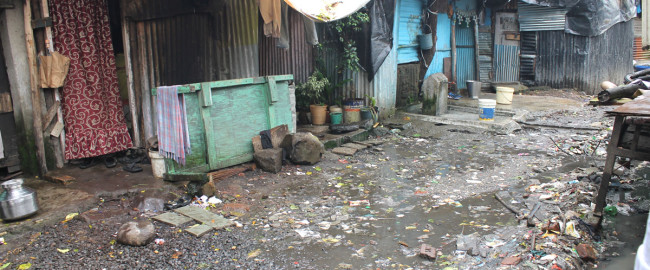
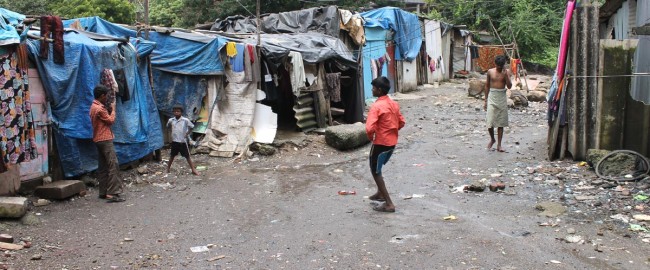
    Multi millions live in the most dire of conditions in the slums of Africa, India and Asia. I am stunned that anyone survives the severity of what I have seen and experienced.   Children are the most vulnerable.  They are starving, tortured, assaulted and refused security from most corrupt police forces. Alcoholism and glue sniffing are two crippling problems of slum life. They are cheap to buy and numbs the pain of hunger. It is for this reason that many residents opt to buy alcohol instead. In Africa and South America and most city streets glue sniffers are prevelent.  Thankfully, this problem is not rife in children; however they often face the knock on effect of alcohol such as abuse.

    Health
    Sickness and disease is rife in slum living while infection spreads quickly.  and proves fatal in the case of the young and weak. The main illnesses to affect slum life include measles, conjunctivitis, colds and flu and headlice. Misinformed adults readily give children in the slums tobacco to chew which can lead to under lying health problems.

    With a strong belief in India’s native medical practice of ayurveda, many traditional people of the slums will refuse to go to doctors or hospitals and instead will take a visit to the village ayurvedic doctor. These ayurvedic doctors believe using the five elements that make up the universe including the human body, earth, fire, water, air and ether, can cure illnesses. Unfortunately this does not compare to modern medicine and many slum people suffer and even die as a result of the care.

    Education

    Children living in the slums have little or no education as they are not known to the Government as Goan. The local schools will not accept these children and they have to rely on outside charities and organizations to help school them. Any child from the slums who is accepted into school will often choose to work for money instead of attending.


  • Hopelessness for Slum Children

    Hopelessness for Slum Children

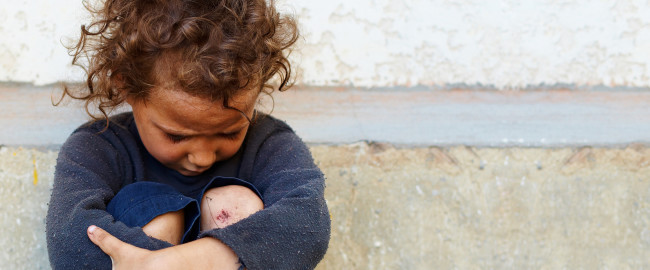
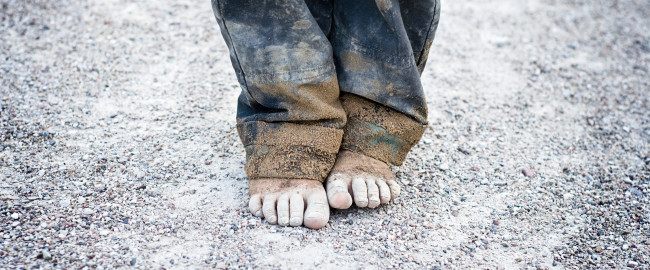
    Slums are hell on earth for children. It is a life in and out of garbage dumps, no place to sleep except in ditches or makeshift shanties, high mortality rates, absentee parents, no adult supervision, small children taking care of toddler siblings, gang wars, epidemic outbreaks, missing infrastructure, violence, and the law of “survival of the fittest.” These little ones have no chance in life really. It is depressing to even think about.  They are often nothing more than cheap labor workers, or exploited by gangs and forced into child labor. The daily lives of slum children are defined by drugs and alcohol as well as sexual abuse while serious health problems dominate their daily life.  The communities they live in don’t have paved roads or sewage systems, little or no water or electricity and the conditions severe for even an adult to live in? Why has the war on poverty not been successful for these future generations? It’s time to think straight and shoot straight for once.

  • Top 5 Slums in the World

    Top 5 Slums in the World

    The 7th billionth person on planet Earth was born about one month ago.  A staggering number to think about, but have you considered that very new human being may have been born in a slum somewhere in the world.  Currently, it is estimated that there are over 200,000 slum communities, shanty towns and “informal settlements” are exploding in the world. Within the next twenty years about one third of all city dwellers will live in slums and grow in size to one billion people.  My vision to help those living in extreme conditions began in the 80’s while working in Asia and visiting City de Soleil in Haiti in 2001 and Kibera slums of Nairobi in 2007.  Vowing to find a way out for children dying in these places, Hidden Choices collaborates with GTSSS today to educate, clothe, house and feed 1,000 children from slums all over India. The program enables students starting in the third grade to obtain quality education, career and leadership training as future change makers for the poor in India.

    The top 5 slums in the world are:

    Neza-Chalco-Itza: the largest slum in the world with roughly four million people growing out of the need for the railroad in the industrial revolution.

    Orangi Town:   Karachi, Pakistan is home to 1.5 million people and still growing after starting only 10 years ago. There are 13 official neighborhoods, each with its own council.

    Dharavi Mumbai, India. After Orangi, the largest slum in Asia. About 1 million people reside on just one square mile of space. In 2011, other Mumbai slums might have surpassed Dharavi in total population, but the figures can only be speculated at this point. What that does mean, though, is that a number of Asia’s largest shanty towns are all in the same city (Notably, Mumbai is the fifth biggest city in the world).

    Khayelitsha: Cape Town, South Africa.  There was a population explosion after apartheid ended and blacks rushed into Cape Town.  The township’s population is incredibly young, with 40 percent of its residents under 19 years old and only about 7 percent over the age of 50.

    Kibera:  Nairobi, Kenya, this slum is the second largest in Africa – with anywhere from 200,000 to 1 million residents. Kibera is often used as the model for the environmental impact of informal settlement.


  • Facts About Poverty

    Facts About Poverty

    Key Facts About Poverty

    • Nutrition
    • Clean Water
    • Sanitation facilities
    • Access to basic healthcare
    • Adequate shelter
    • Education & information

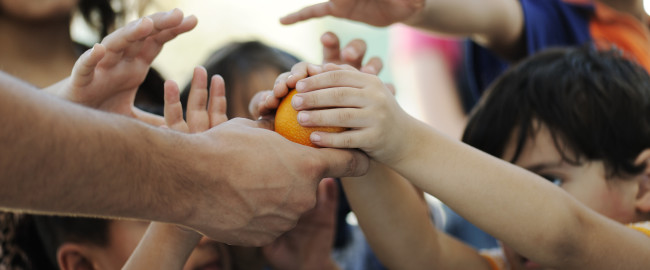
    More than 1 billion children are severely deprived of at least the essential services and goods to SURVIVE, GROW and DEVELOP

    • 9.2 million children die each year
    • 3.3. million babies are born still born

    WHY?

    The poorest of families are unable to obtain basic healthcare for their children.  Most of the countries with weakened healthcare systems are in:

    • Major armed conflict
    • Cannot provide effective child survival strategies crucial to child development and neonatal deaths

    The Solutions

    Death can be avoided with proven, low cost preventative care and treatment.  Scaling up effective health services by providing education services and better trained health workers. Supporting children at risk by:

    • Continuous breastfeeding
    • Vaccinations
    • Adequate nutrition
    • Mosquito nets
    • Key Health Services Needed
    • Antenatal care
    • Skilled attendance @ delivery
    • Postnatal care
    • Child Health
    • Equity of access in health systems

    29,000 – the # of children who die every day from preventable causes

    Hidden Choices is committed to the long term goals of saving lives that are mired in poverty and death.

    According to the World Health Organization in June 2012, the US Government, The Governments of Ethiopia and India signed a pledge to reduce child mortality.  It was the beginning of a world wide effort to save children’s lives; attainable, but not without long term commitment.
    The message in 2012 was this: we have the knowledge and technology today to end preventable deaths of children under 5 child mortality rate to 20 per 1,000 births in every country.

    In 2001, the World Health Organization estimated the leading causes of preventable death of children under 5, most during the 1st month of life,  died from preventable causes attributable to acute respiratory infections, measles, diarrhea, malaria & HIV AIDS.

    According to WHO:

    • Over 1/3 of all child deaths are linked to malnutrition
    • Children in developing countries 10 times more likely to die before age 5
    • 9 million children under 5 die every year
    • 70% of these deaths due to preventable causes